
For decades, physical security systems were treated as standalone, closed environments. Access control panels, intrusion detection systems, and perimeter protection were designed to operate independently, often isolated from wider IT networks. That world no longer exists.
Today’s physical security systems are connected, integrated, remotely managed, and increasingly data driven. They exchange information with corporate networks, cloud platforms, analytics engines, and third-party services. In doing so, they have crossed an important threshold: they are now cyber systems as much as physical ones.
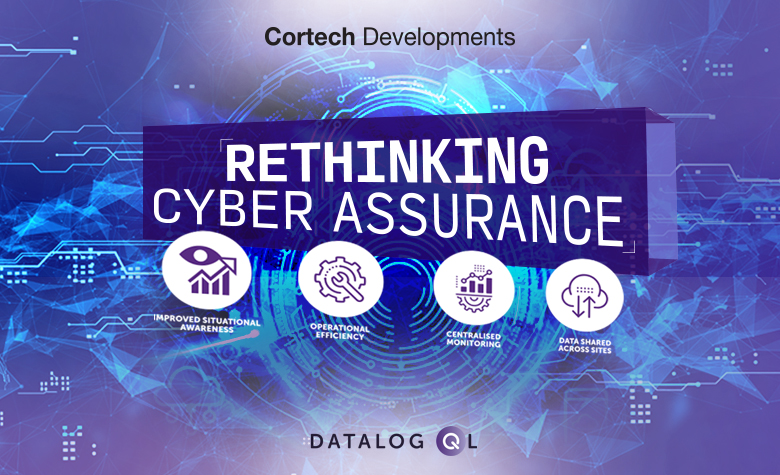
This convergence did not happen overnight. It has been driven by very practical pressures: the need for centralised monitoring, improved situational awareness, operational efficiency, and the ability to share data across systems and sites. Integration has delivered real value, but it has also quietly expanded the attack surface.
Where physical security systems once relied on obscurity and isolation, they now rely on connectivity and trust. Controllers communicate with servers, servers communicate with other platforms, and those platforms often sit on shared infrastructure. Each connection introduces assumptions about authentication, privilege, and behaviour, assumptions that are not always revisited once systems go live.
This shift fundamentally changes the risk profile. Threats no longer come solely from forced entry or physical tampering. They now include credential compromise, lateral network movement, insecure APIs, unmanaged firmware, and supply-chain vulnerabilities. A door controller or video platform may appear physically secure while introducing a cyber pathway into critical infrastructure.
Crucially, these risks are not theoretical. Incidents increasingly demonstrate that physical security systems can be used as entry points into wider networks or manipulated to undermine trust in safety and security operations. In high-risk environments, the consequences extend beyond data loss into safety, continuity, and reputational harm.
Secure by Design thinking recognises this reality. It starts from the assumption that connectivity is unavoidable and focuses instead on how systems are architected, segmented, governed, and assured over time.
Rather than asking whether a system is connected, Secure by Design asks whether those connections are necessary, proportionate, and defensible. It considers how trust is granted, how it is limited, and how it can be withdrawn when conditions change.
Increasingly, this has driven the adoption of centralised platforms that provide visibility and governance across disparate systems, not to add complexity, but to make security intent explicit and manageable over time. By acting as a supervisory layer, such platforms help organisations understand how physical security data moves, where control resides, and how cyber risk is distributed across the estate.
One of the most persistent challenges in converged environments is ownership. Physical security systems often sit between operational technology, IT, and facilities teams. When cyber risk emerges, responsibility can become blurred.
Secure by Design approaches bring clarity by making architecture, integration, and access decisions explicit. When systems are designed with clear ownership and documented intent, assurance becomes a by-product of good practice rather than a reactive exercise.
As cyber and physical domains continue to converge, organisations that treat physical security as a purely operational concern risk inheriting cyber exposure they neither expect nor control. Those that recognise physical security systems as cyber systems, and design them accordingly, are far better placed to manage risk, demonstrate assurance, and adapt as threats evolve.
