
Physical security systems are composed of many moving parts: controllers, sensors, readers, cameras, panels, servers, and management platforms. When systems are deployed, the focus often lands on the capabilities of these components rather than how they interact.
But security is rarely a property of a single device. It is a property of the system. A highly secure controller can still be exposed through an insecure network segment. A well-designed access control solution can still be compromised through a weak integration point or a shared credential.
Secure by Design places architecture at the centre of decision-making. It asks fundamental questions early:
These questions are particularly important when estates span multiple sites, suppliers, and operational teams. In such environments, consistency of design often matters more than the individual specification of any single component.
One of the most common failure patterns is to treat security as a device-level problem. The assumption is that if the product is secure, the system will be secure.
In practice, this leads to systems that are difficult to govern. Security becomes dependent on the correct deployment of each device, correct configuration of every network segment, and correct operational behaviour across multiple teams. This is a fragile model.
If any one component is misconfigured, if any network segment is overly permissive, or if any integration is poorly documented, the security posture becomes unpredictable. In complex estates, this unpredictability is the primary driver of risk.
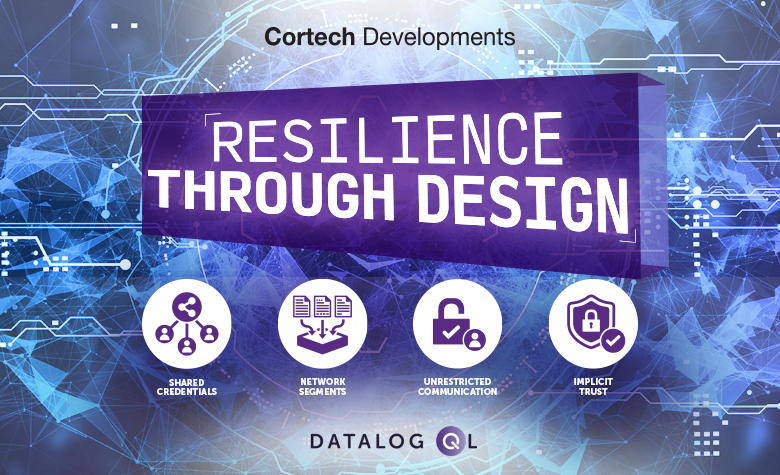
Secure by Design starts with limiting trust. It assumes that systems should only be able to do what they need to do, and no more. That may sound obvious, but it is often not implemented in practice. When systems are built around convenience or speed, it is common to see:
A Secure by Design architecture is deliberately structured. It uses segmentation to reduce the blast radius of a compromise and applies least privilege to ensure that no system can perform actions beyond its intended purpose. This approach also supports operational clarity. When trust boundaries are explicit, teams understand what they are responsible for, and how to respond when something changes.
In many estates, the most effective way to maintain architectural consistency is through a supervisory layer that sits above individual systems. Rather than relying on each subsystem to be configured perfectly, a central platform can provide governance, visibility, and control across the estate.
This is where solutions such as Datalog QL can play a role. By providing a centralised model for security data, Datalog QL can help organisations ensure that integration and control decisions are applied consistently, regardless of the underlying hardware or vendor landscape.
Importantly, this is not about replacing systems or introducing a single vendor dependency. It is about making security decisions visible and enforceable across a complex estate, so that the overall architecture remains defensible.
Secure by Design is not about over-engineering. It is about creating structures that limit the impact of failure, and make systems easier to understand, manage, and assure throughout their lifecycle. Retrofitting security into an existing estate is possible, but it is often costly and complex. The deeper challenge is that retrofitted controls may not be reflected in architecture, integration, or operational practice. This creates a gap between what is intended and what is actually happening.
A Secure by Design approach reduces this gap by embedding security into architecture from the outset. It aligns system design with operational reality and makes security a natural outcome of how the estate is built and managed.
