
Today, operators are expected to oversee increasingly complex environments that bring together physical security, safety systems, operational technologies, building management platforms, and critical business infrastructure.
At the same time, organisations face growing demands around resilience, compliance, operational continuity, and resource efficiency.
As operational environments continue to evolve, so too must the control room.
Modern operators are no longer simply monitoring events. They are expected to interpret information, assess risk, coordinate stakeholders, follow procedures, and support operational decision-making. This shift places greater demands on personnel than ever before.
In many sectors, including utilities, healthcare, custodial services, transport, and data centres, operators are now responsible for managing events that can have significant operational consequences.
Providing them with the right information at the right time is essential.
Traditional control rooms often relied on multiple independent systems displayed across numerous screens.
While this provided access to information, it did not necessarily support understanding.
The next generation control room is focused on delivering operational awareness rather than simply displaying data. This means providing:
The objective is to help operators understand what is happening and determine the most appropriate response quickly and confidently.
Operational environments are becoming increasingly distributed. Multi-site estates, remote facilities, and geographically dispersed operations are now common across many sectors. This creates new challenges for control room teams.
Modern operational platforms increasingly support browser-based access, role-specific interfaces, and secure remote connectivity, enabling authorised personnel to access information wherever it is needed.
This flexibility helps organisations maintain visibility and coordination across complex estates while supporting evolving workforce requirements.
The volume of information entering control rooms continues to grow. Without effective management, operators can quickly become overwhelmed.
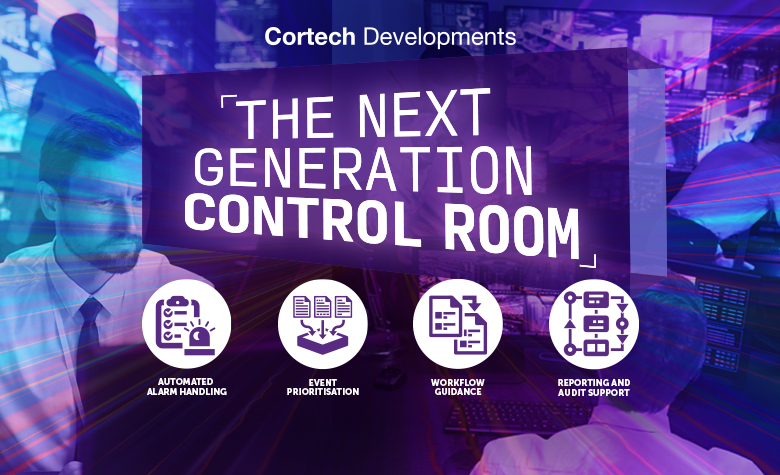
Automation is playing an increasingly important role in helping organisations manage complexity. This may include:
Rather than replacing operators, automation helps reduce administrative burden and allows personnel to focus on higher-value decision-making activities.
The next generation control room will not be defined by the number of screens on the wall or the volume of information displayed.
It will be defined by how effectively information is transformed into understanding.
Organisations that invest in operator-focused technologies, unified visibility, and intelligent workflows will be better positioned to improve resilience, strengthen decision-making, and support operational continuity.
Despite advances in technology, the most important component of any control room remains the people operating it.
The future lies in creating environments where technology supports human decision-making rather than competing with it.
By providing operators with clear information, meaningful context, and effective tools, organisations can create control rooms that are not only more efficient, but also more resilient and better prepared for the challenges of an increasingly connected world.
