
Traditionally, resilience strategies focused on preventing disruption. Today, the emphasis is shifting towards maintaining operations during disruption and recovering quickly when challenges arise. At the heart of this approach lies one essential capability: visibility.
Organisations now rely on an increasingly complex ecosystem of technologies to support daily operations. Security platforms, access control systems, CCTV, fire detection systems, building management technologies, and operational technologies all generate valuable information. Together, these systems help organisations protect people, assets, and critical processes.
However, many of these technologies operate independently, making it difficult to gain a complete understanding of events as they unfold. During routine operations this may create inefficiencies. During a critical incident, it can significantly affect decision-making and response times.
When an incident occurs, operators need accurate information immediately. Questions such as:
must be answered quickly.
If information is spread across multiple systems, valuable time can be lost gathering data and assessing the situation.
A lack of visibility can lead to delayed responses, inconsistent actions, and increased operational risk.
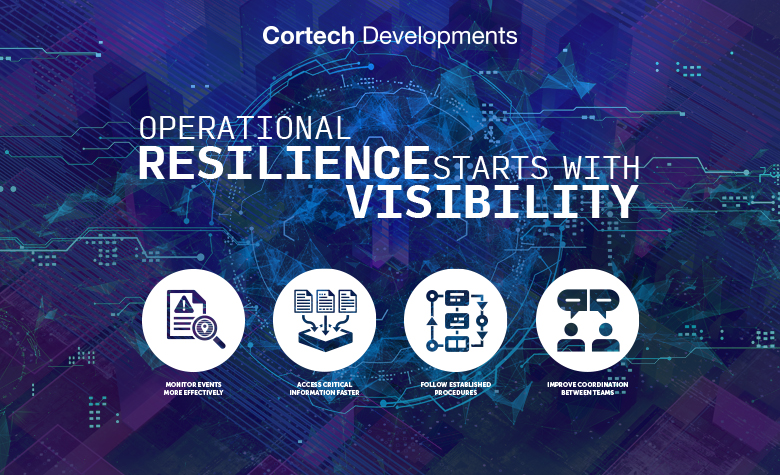
Many organisations are now looking to improve resilience by creating a clearer operational picture. By bringing information together and improving visibility across systems, operators can:
Rather than reacting to isolated events, operators can understand situations within a wider operational context.
Technology alone does not create resilience. Resilience is achieved when people have the information they need to make informed decisions under pressure. By improving visibility, organisations can support faster responses, greater operational confidence, and more effective incident management.
This becomes increasingly important in environments where operational continuity is essential and the consequences of disruption can be significant.
As organisations continue to adopt new technologies, operational complexity is likely to increase. he ability to manage information effectively and provide meaningful visibility will become a critical factor in supporting resilience.
Organisations that invest in improving visibility today will be better positioned to adapt to future challenges, evolving threats, and changing operational requirements.
Because resilience starts with understanding what is happening, when it is happening, and what needs to happen next.
