
While organisations often focus on the capabilities of the technologies they deploy, there is another factor that can have an equally significant impact on operational performance: the people using them. The most advanced system in the world delivers little value if operators find it difficult to use.
Security, safety, and operational platforms exist to help operators make informed decisions. However, many environments still rely on multiple interfaces, complex workflows, and disconnected systems that require operators to spend valuable time searching for information.
When personnel must navigate several applications to understand an incident, operational efficiency can suffer. The goal should be to simplify the process of gathering information so operators can focus on understanding events and determining the most appropriate response.
Operators often work in high-pressure environments where decisions must be made quickly. Every additional screen, alarm, or manual process increases cognitive load and can make it more difficult to identify what is truly important.
Poorly designed interfaces can contribute to:
Effective system design helps reduce these challenges by presenting information clearly, consistently, and in context.
The best operational platforms are designed around the needs of the user rather than the technology itself.
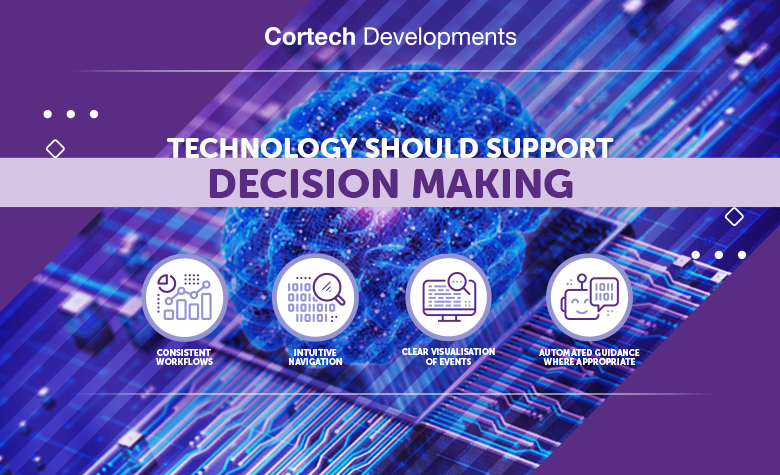
This means providing:
By reducing complexity, organisations can improve operator confidence and support more consistent decision-making.
Many organisations are facing challenges around recruitment, training, and retaining experienced personnel. Systems that are difficult to learn or operate can increase onboarding times and place additional pressure on existing teams. User-friendly operational environments can help reduce training requirements and support a more positive experience for operators. This can become increasingly important as organisations look to attract and retain skilled personnel.
The future of operational management is not about replacing people with technology. It is about using technology to support people more effectively. By providing operators with the information, context, and tools they need to perform their roles efficiently, organisations can improve resilience, strengthen operational performance, and achieve better outcomes.
In an increasingly complex world, designing systems that operators actually want to use may be one of the most important investments an organisation can make.
