
While each system performs an important role, managing them independently can create significant operational challenges.
As organisations seek greater visibility, situational awareness, and operational resilience, many are reassessing how security and operational systems are managed.
Historically, security systems were deployed to address specific requirements.
Over time, however, organisations have accumulated technologies from multiple manufacturers, often operating independently of one another. This can result in:
For operators managing complex environments, these challenges can increase operational risk and make incident management more difficult.
Many organisations are moving away from managing individual systems in isolation.
Instead, they are looking for platforms that provide a unified operational environment capable of bringing information together from multiple technologies.
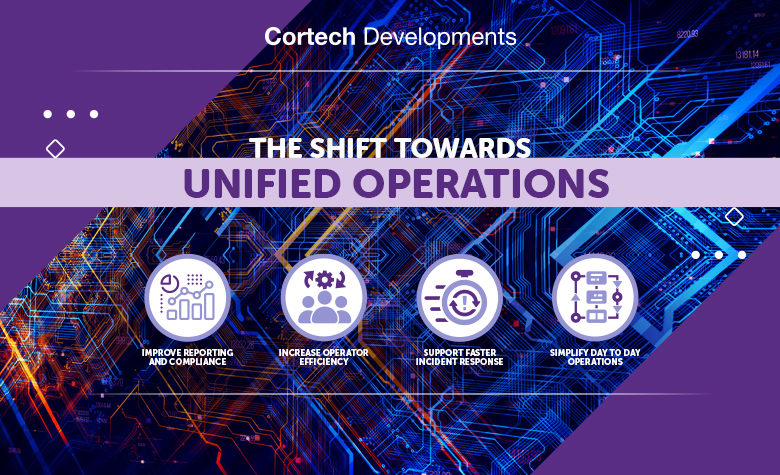
By consolidating alarms, events, video, access control activity, and operational data into a single platform, organisations can create a clearer understanding of what is happening across their estate. This approach can help:
A modern security management platform should not require organisations to replace existing investments. Instead, the focus should be on integration.
The ability to connect modern and legacy systems enables organisations to maximise the value of existing infrastructure while creating a scalable platform for future growth.
This flexibility is particularly important within critical environments where technology replacement programmes may span several years.
The value of a security management platform extends beyond system integration. By presenting information in a clear and meaningful way, organisations can improve operator confidence and support better decision-making.
When personnel have immediate access to the information they need, they can focus on managing incidents rather than navigating technology.
As operational environments continue to evolve, organisations need platforms capable of adapting alongside them.
The organisations best positioned for success will be those that can transform complexity into clarity, connect information across multiple systems, and create a single operational view that supports informed decision-making.
Increasingly, the question is no longer how many systems an organisation has, but how effectively those systems work together.
