
While this increase in data has the potential to improve security and operational performance, it also presents a growing challenge: information overload.
As organisations continue to expand their use of technology, many are discovering that having more information does not always lead to better decisions.
Security systems are designed to provide visibility.
However, when information is distributed across multiple applications, dashboards, and interfaces, operators can quickly become overwhelmed.
A single incident may require personnel to access several systems to understand what has happened, identify who is affected, and determine the appropriate response.
This process can consume valuable time during situations where rapid decision-making is critical.
The issue is not a lack of information. In many cases, it is the opposite.
Operators are often required to process large volumes of data while simultaneously managing alarms, communications, procedures, and ongoing operational activities.
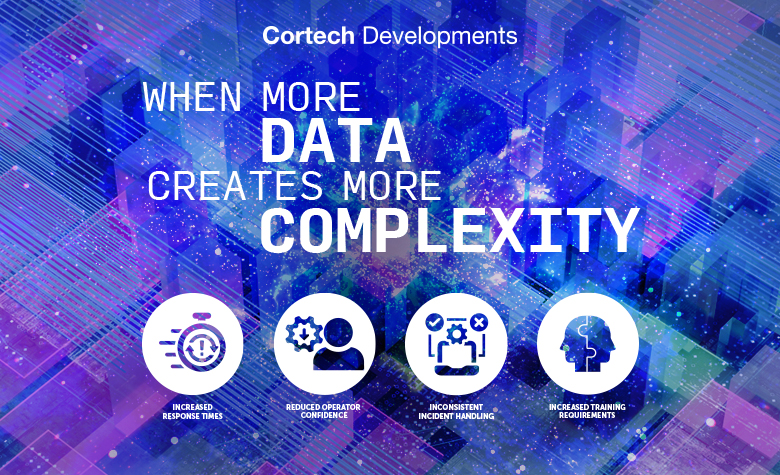
Information overload can affect security operations in several ways:
As environments become more complex, these challenges can place additional pressure on control room personnel and reduce operational efficiency.
The objective of modern security operations is not simply to collect data but to understand it.
Operators need information that is relevant, contextualised, and easy to interpret.
For example, an access control alarm on its own may provide limited value. When combined with CCTV footage, site plans, operational procedures, and related system events, it becomes significantly more meaningful.
The ability to bring information together and present it in context helps operators move from data gathering to decision-making.
Effective situational awareness depends on more than visibility alone.
It requires organisations to present information in a way that enables operators to quickly understand what is happening and what actions should be taken.
By reducing complexity and improving access to relevant information, organisations can strengthen operational performance and support more consistent incident management.
The volume of operational data is unlikely to decrease.
As organisations continue to adopt new technologies, the challenge will be ensuring that information remains manageable, meaningful, and actionable.
Those that successfully address information overload will be better positioned to improve situational awareness, support resilience, and make faster, more informed decisions when it matters most.
